
NOTES ON USB TEMPERATURE FILES
A logger file
is a record.
Not a verdict.
How published sources say a USB temperature logger is started, timed, exported and ice-checked — and why that file still does not decide whether food, a journey or a medicine store is acceptable.
Source-based notes for small UK operators and bench users who already have, or are about to use, a USB temperature logger. Temp Logger UK is not a certification body.
WHAT THIS SITE DOES
What can a USB temperature file show, and what can it not decide?
These notes explain how published tests start, time and export a USB temperature logger, and how kitchen templates record a spot check. A file can show an interval, a clock string and a gap. It cannot decide whether food, a journey or a medicine store was acceptable. Temp Logger UK is not a certification body, and this publication has not published original logger exports. The distinctions below keep the record, the diary and the related shops apart.
| Document | What it can show |
|---|---|
| USB time series | Interval, clock string, columns and gaps, as written in the export. |
| Kitchen diary | A spot check under SFBB or CookSafe. Not an automatic pass. |
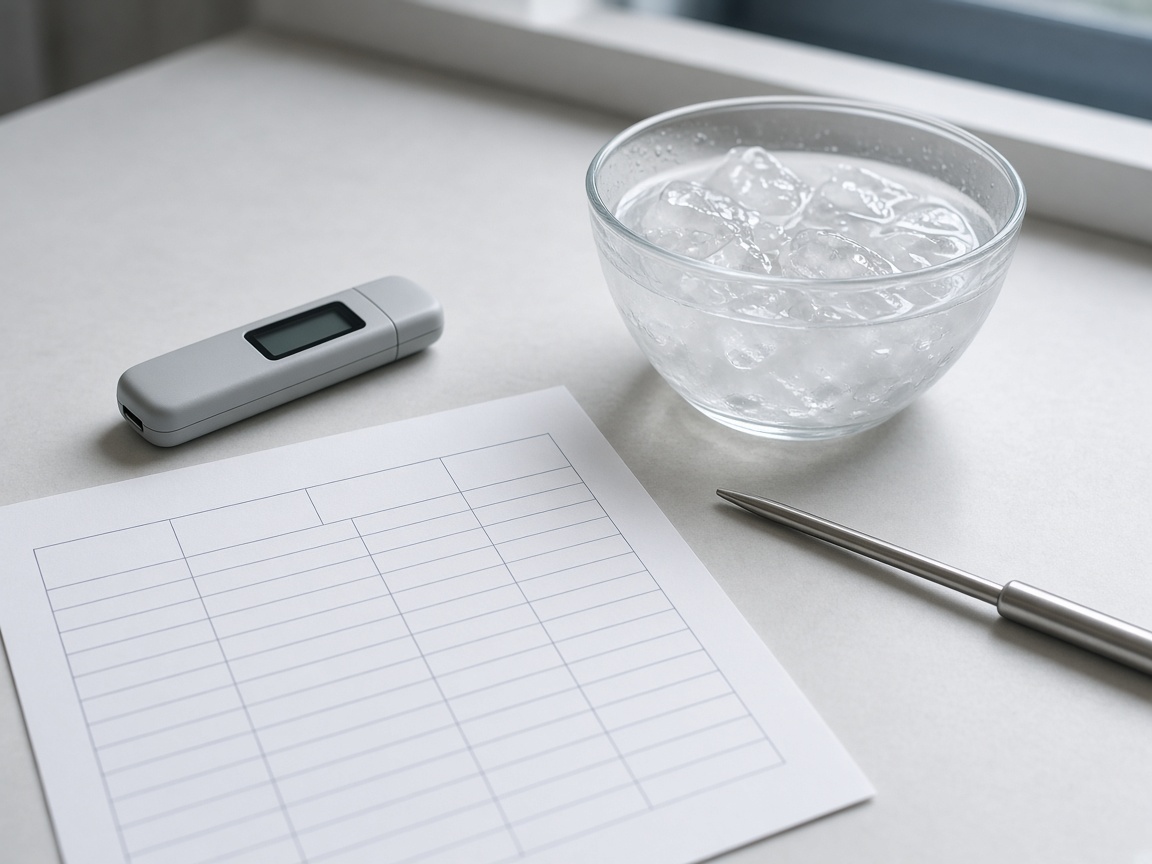
| Ice-point note | A field check near 0 °C. Not a UKAS certificate or an EN 12830 type test. |
Interval arithmetic on one 2018 sample is in Jos Verstraten’s RC-5 note. The England and Wales kitchen pack is Safer food, better business.
Record notes
Start, interval, clock, columns, ice-point, door spikes and gaps — each kept in its own note.
Open the record notes ↗02 / THE DIARYFood log sheets
SFBB, CookSafe and kitchen templates. A sheet is not an automatic pass.
Open the food-log notes ↗03 / THE RELATIONSHIPRelated retail shops
Related USB and channel shops stay on the disclosure page. They are not a buying guide.
Read the disclosure ↗START WITH THESE NOTES
How is a stated 32 000 points different from a filled file?
A catalogue figure of 32 000 points is a statement about memory, not a battery-life result and not a file from this site. On one RC-5 sample tested in 2018, that memory lasted about 89 hours at 10 seconds and about 22 days at one minute. Those conversions belong to that test. Name the interval, keep the clock string as printed, and leave the results column empty until an export has actually been opened.
- Name the interval.
- Keep the clock string.
- Leave the results column empty.
 Source-based note
Interval and memory on a 32 000-point USB logger
How a published RC-5 test converted interval into hours, and why that arithmetic is still not a battery-life figure.
7 MIN READ ↗ Source-based note
Start, stop and delay are not automatic
A published RC-5 test required a long Play press, allowed a delayed start, and stopped when memory was full. Plugging in USB did not start the record.
6 MIN READ ↗ Source-based note
Read the timestamp as it was written
Published guidance asks for timezone and daylight-saving time to be stated. A CSV time string copied from the PC is not a corrected British Summer Time series.
7 MIN READ ↗READ THE CLAIM. SEE THE SOURCE.
How is an ice-point reading different from an EN 12830 report?
A slurry near 0 °C, a factory paper in the box and an EN 12830 type-test report are three documents. The slurry can show a field check on that day. The factory paper shows what the maker printed. The type-test report belongs to a defined recorder, and it does not decide this week’s journey. These pages publish explanations and a blank record. They do not include original exports from this publication.