
EVIDENCE
Methods
A source-based note, a calculated example and an original measurement are different kinds of evidence.
A claim should carry enough context to check it. These notes distinguish what a document says, what a calculation assumes, and what an experiment actually measured.
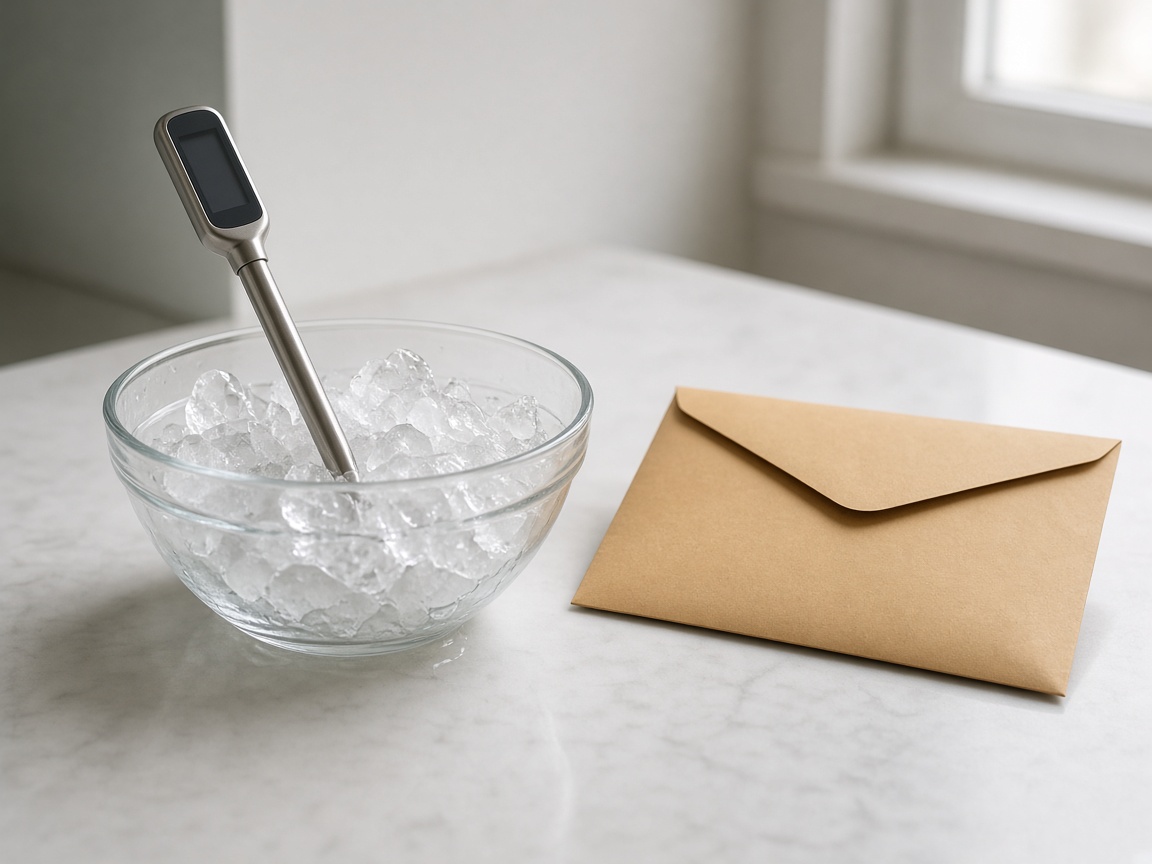
What is the difference between a source note, a calculation and a measurement?
A source-based note explains identified publications and their limits. A calculated example is arithmetic with the assumptions stated, and it does not imply an experiment. An external measurement stays with its original author, sample and conditions. An original measurement would be a documented experiment by this publication, and none is included on these pages. The table below keeps those four labels apart.
| Label | Meaning |
|---|---|
| Source-based note | An explanation of identified publications and their limits |
| Calculated example | Arithmetic with stated assumptions; no experiment implied |
| External measurement | A result attributed to its original author, sample and conditions |
| Original measurement | A documented experiment by this publication; none is included on these pages |
Why do a kitchen diary, a USB file and a cold-chain release not share one answer?
A spot-check kitchen diary, a USB time series and a regulated cold-chain release file answer different questions. SFBB is the official pack for small caterers in England and Wales; Scotland uses CookSafe. Medicines storage is NHS SPS and MHRA Inspectorate material. EN 12830 and EN 13486 are type-test and periodic-verification documents, explained on the Cambridge Refrigeration Technology ATP page — not a badge that makes this week’s journey acceptable.
These notes cover how to read a USB temperature file: start and stop, interval and memory, the clock string, export columns, an ice-point field check, a door spike, and a gap. Separate notes explain multi-channel contact points, a published United States strawberry study, and medicines-store mapping. Those notes attribute the external files and say why this publication has not published its own.
What does a documented logger test need?
A result presented as an original measurement needs the instrument identity and firmware, the software version, probe type and placement, interval, timezone as printed on the file, start and stop events matched to the first and last rows, the raw PDF and CSV from the same run, and a sentence that states the limits. An ice-point field check stays a field check. An empty results column is not a pass.
What does the blank temperature-log file contain?
The download contains column headings and one empty row, without fabricated sample readings. It is a documentation aid, not a test procedure and not a certificate. The empty row is there so a later record can keep the instrument, the interval, the timezone and the ice-point check beside the reading. Nothing in that file is a sample from this publication, and nothing in it is a pass.
Download blank temperature-log record ↓How are sources chosen for these notes?
These notes prioritise identifiable original work and official documents. Independent author sites, training hubs, regulator guidance and shop listings serve different purposes. A shop catalogue sentence can name a model; it does not establish a specification. Their work is attributed rather than presented as a Temp Logger UK result.
The record notes cited here include Verstraten’s 2018 RC-5 test for interval, Play/Stop and full-memory behaviour; Xanthium for a published CSV header; Luke Miller for a bench thermocouple method that is not copied as a product figure; GuideGxP for timezone, gaps and alarms, with UK pages pointing to MHRA and SPS; and High Speed Training plus SFBB/CookSafe for kitchen diaries. Their work is attributed rather than presented as a Temp Logger UK result.
What does the date on a page mean?
The date on a page marks when the text or sources were last checked. It does not mean a logger was exported that day, and it is not a review by a named metrologist, an environmental health officer or an accredited laboratory. These notes are attributed to Temp Logger UK. If a named person reviews a page, that person and the scope of the review will be identified. Corrections identify the changed claim and its basis.
Corrections need the page, the passage and the source.
How are related retail shops kept off the record notes?
The operator also owns instrument retail sites. Related retail names stay on the commercial disclosure. Ownership never substitutes for testing, and these notes do not use those shops as a buying guide. A shop catalogue can name a model. It does not establish an interval, a column list or a certificate, and it is not cited from the record notes as a measurement.
Policy text checked 23 September 2026.